
Stonkholders,
Last week the market circulated its rate card. Over the weekend, management was reminded that a price and a timetable are different promises.
This is our assessment before the next round of results: what the completed week established, what has changed since, and what would make us reconsider. The future has been invited to the meeting. It has not yet supplied the minutes.
Our previous letter argued that everything was now competing for capital. Last week supplied the reply, and it was not a refusal. Twenty-two billion dollars of thirty-year bonds found buyers on Thursday at a yield below the market's quote minutes earlier. Oracle's customers prepaid eleven billion dollars of a data-centre bill. Gold funds took in eighteen billion in August, the second-largest monthly dollar inflow on record.
The absence of a funding crisis does not mean the cost adjustment is over. The question is whose cash flow can absorb the revised terms, and whether financing, expenditure and commercial returns are still working to the same timetable.
The Latest Month and the Last Twelve Answer Different Questions
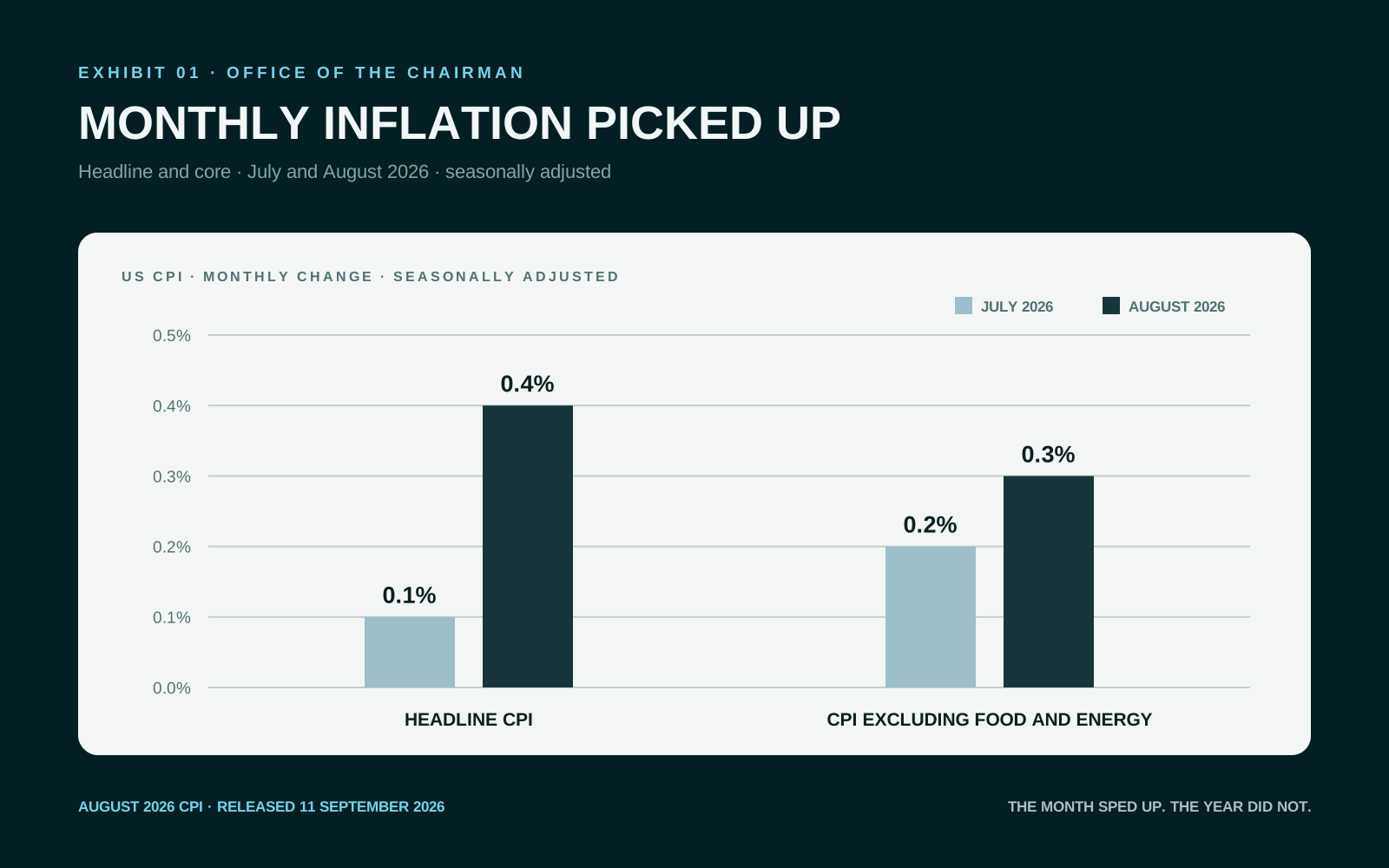
Consumer prices rose 0.4% in August after 0.1% in July; the twelve-month change held at 3.4%. Excluding food and energy, prices rose 0.3% on the month, the fastest since April, while the twelve-month rate eased from 2.5% to 2.4%. Management declines to quote whichever horizon flatters its argument.
Gasoline rose 3.9% and supplied more than a third of the monthly increase. But rent and owners' equivalent rent rose 0.2%, food at home was flat, and medical care, motor insurance and household energy fell. Anyone calling this broad acceleration does not have the table on their side. Anyone calling it nothing has not filled a tank.
Real average hourly earnings fell 0.1% in August and are 0.3% below a year earlier. Real weekly earnings rose 0.2% for all employees, but only because the workweek lengthened; for production and nonsupervisory employees, whose workweek did not change, they fell 0.1%. The extra hours that rescued the headline were not evenly available. Michigan's preliminary September sentiment fell to 47.8 from 51.7, with year-ahead inflation expectations up from 4.0% to 4.6%.
The Freight Department Buys a Finished Fuel
Producer prices rose 0.4% in August, with diesel up 24.1% in a month and accounting for more than a third of the goods increase, while services rose 0.1% and trade services, which measure retail and wholesale margins, fell 0.2%. Higher transport prices alongside softer margins raise the question of how much cost can be passed on, without establishing who absorbed the freight bill.
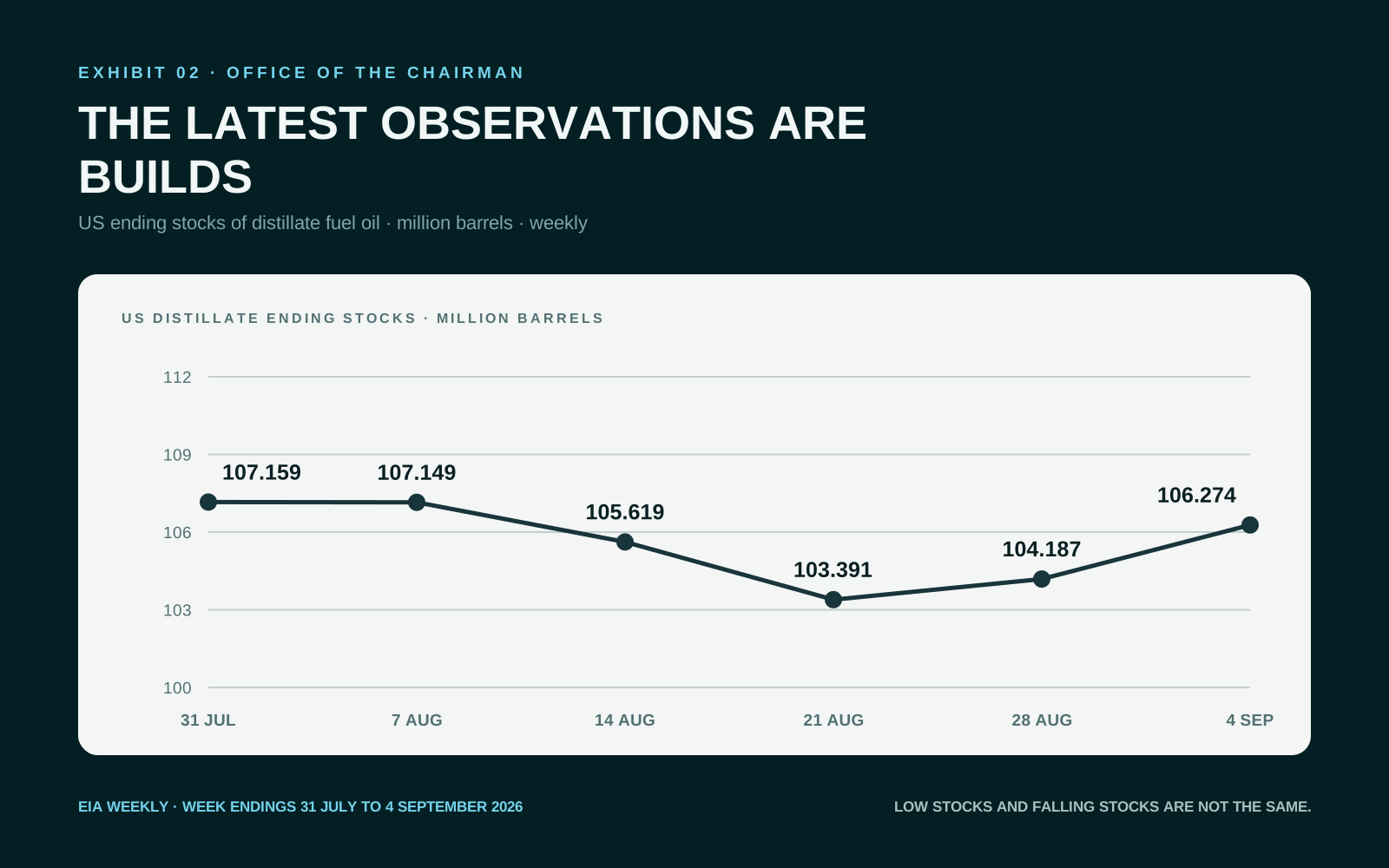
Inventories explain why diesel specifically is the problem. For the week ending 4 September commercial crude stocks matched their five-year average while distillate stocks were 106.3 million barrels, 13% below theirs. Distillates rose 2.1 million on the week, a second consecutive build from 103.4 million on 21 August. Low stocks and falling stocks are not the same observation, and this week's is low stocks that rose. Management has kept the build in the evidence rather than editing it out of the warning.
A national crude figure at its five-year average is not a statement that every grade, region and route is adequately supplied, and the distinction became less theoretical over the weekend. Reuters reported on Saturday that an outage on the Saudi east–west pipeline, which carries about four million barrels a day to Yanbu, threatens roughly 4% of global supply, with repairs estimated at up to five or six weeks. Separately, a regional meeting on the Strait of Hormuz due in Salalah on Sunday was postponed.
We have not observed the consequences of either development, and a reported repair estimate is not a delivered barrel. But the September Short-Term Energy Outlook expects diesel crack spreads above two dollars a gallon through November before easing, and that easing is explicitly conditioned on a return to normal tanker traffic through Hormuz. The assumption now has a named stress attached to it.
Crude answered first, and has kept answering. Brent was above $107 before the open and above $109 an hour into the session, up about 4.5% on the day, with West Texas Intermediate above $104. One report put the outage down to a drone strike and ING, quoted there, notes it is not yet clear how severe the damage is or how long the line will be down; it has kept its fourth-quarter base case at $80. A price move is the market's first guess at a repair timetable, not the timetable. Replenishment alongside a narrowing diesel premium would still weaken this concern, and the latest build is the first half of that.
Lenders Are Present. They Have Revised the Rate Card.
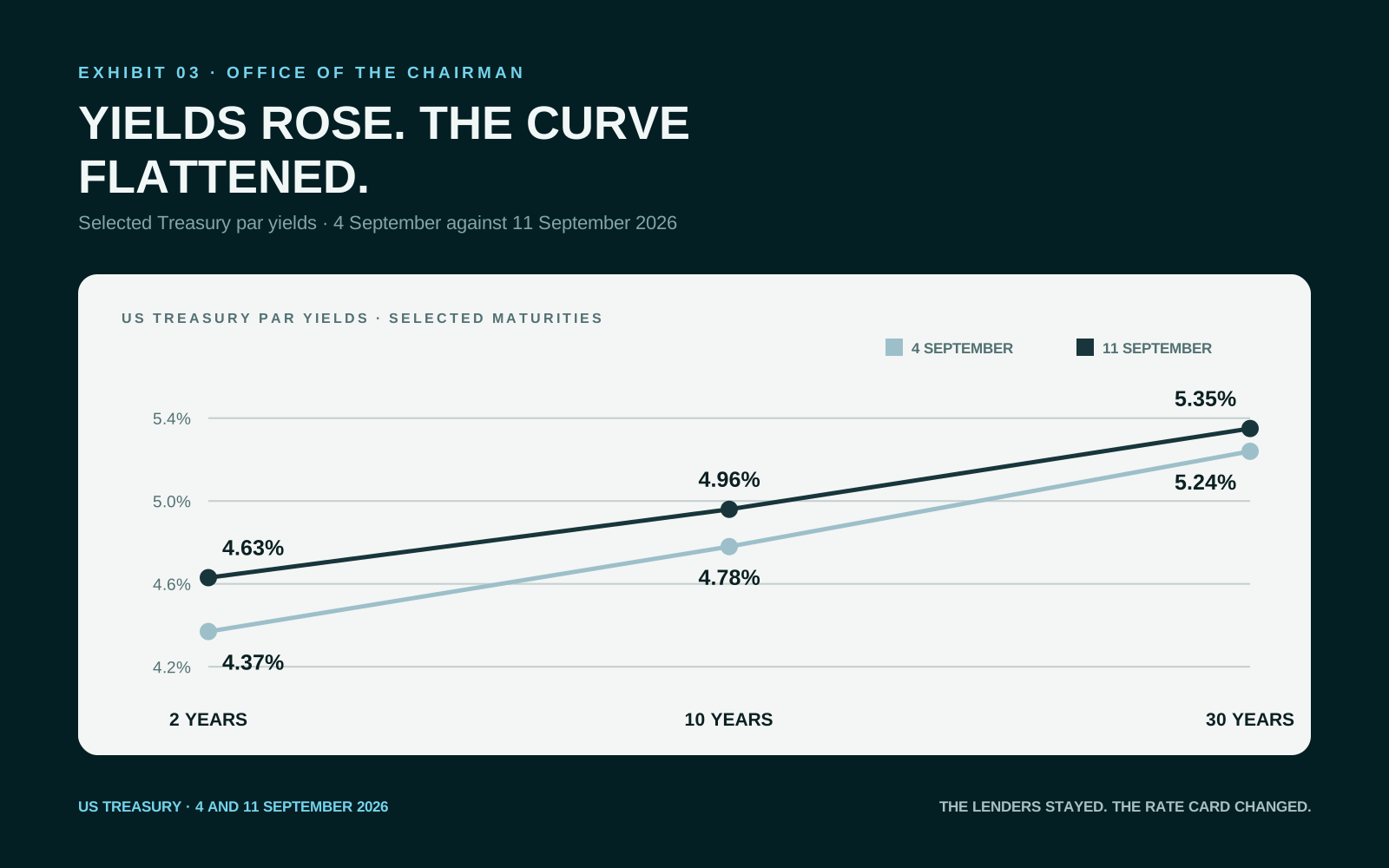
Friday's official Treasury observations put the two-year at 4.63%, the ten-year at 4.96% and the thirty-year at 5.35%, up 26, 18 and 11 basis points on the previous Friday. The front end moved most, consistent with a repricing of the expected path of policy, though that does not rule out other contributors. These are dated par observations, not the rate available to any particular borrower.
It was not a buyers' strike. Thursday's thirty-year cleared at 5.308% with indirect bidders taking roughly 79%, among the strongest reception statistics of the year and the highest yield the Treasury has paid at that tenor since 2001. Demand is deep at the price, and the price is the point.
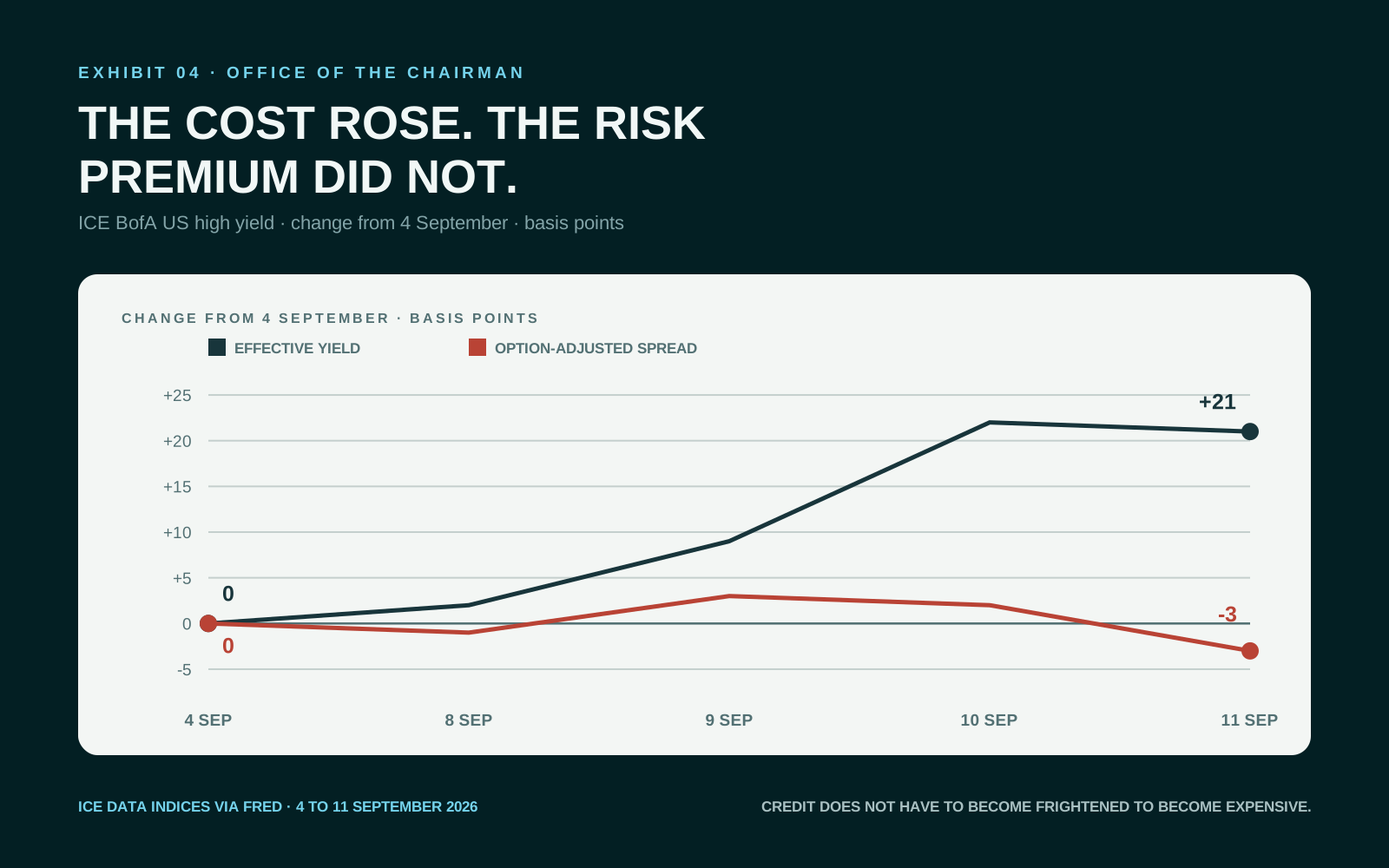
Corporate borrowers received the same rate card without the auction coverage. The effective yield on the ICE BofA US high-yield index rose from 7.20% on 4 September to 7.41% on 11 September, twenty-one basis points across the week. Its option-adjusted spread, the additional compensation for credit risk, did not follow: it ended the week at 2.65%, three basis points below where it started. The two measures are built differently and their difference is not a clean decomposition. What can be said is the more useful thing: borrowing became more expensive over a week in which lenders asked slightly less for the risk of the borrowers. Credit does not have to become frightened to become expensive.
That index is a market average, not a quotation offered to any individual company. A borrower with fixed coupons is protected from immediate repricing of that debt, which is not the same as being unaffected: valuations, acquisition arithmetic, hedging costs and investment decisions can respond well before a maturity does. Management is reviewing the total invoice, not merely the surcharge. The index's latest observation is Friday's, so it still predates the weekend and cannot certify a response to events that had not yet happened.
Before the open we noted that the ten-year had barely moved. The session has overtaken that. The ten-year traded above 5% for the first time since 2007, about four basis points higher on the day, with the two-year at a fifty-two-week high and the thirty-year close to its own. One data service attributes the move to the oil surge feeding inflation expectations, which makes it the same story as the paragraph above rather than a separate one. These are live secondary-market quotes; the Treasury's official par yields for today publish after the close.
What has stayed quiet is corporate credit itself. The high-yield and investment-grade bond funds are each down about two-tenths of a percent, which is noise rather than stress. Expensive money alongside calm credit is the observation this letter opened with. It is now being made at a higher level.
The Customer Has Brought Part of the Financing
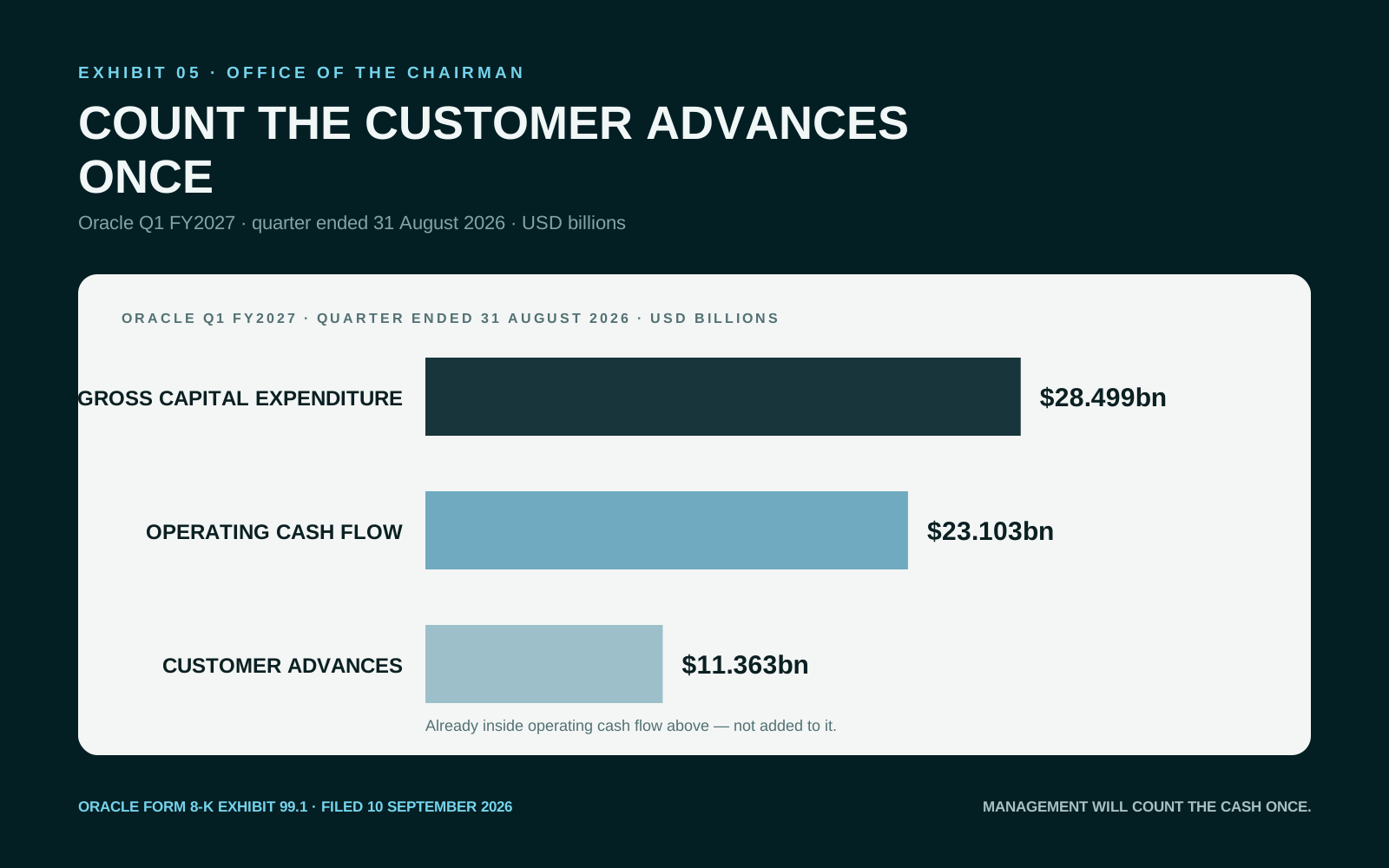
Oracle's latest quarter reported operating cash flow of $23.1 billion, of which $11.4 billion was customer prepayments the company classifies as carrying a significant financing component. Capital expenditure was $28.5 billion, so operating cash flow less capital expenditure was negative $5.4 billion, and that is after the prepayments. They are already inside operating cash flow; adding them again would count the same support twice.
The customer is supplying both an order and part of the financing. That is useful support, but not two independent votes of confidence: where the same counterparties provide the demand and a large share of the upfront cash, the risk runs both ways.
Nothing in the filing says that has happened, that contracted advances can be withdrawn, or that the funding is circular. It says the immediate cash requirement has been reduced and the obligation to deliver has not. One quarter is not a trend.
A Listing Date Is Not an Operating Budget
Over the weekend Sam Altman said OpenAI would not list this year, calling the present an "ill-advised moment" given safety work, and adding that the company does not feel pressure on the question. He named no other year. The remarks followed Dario Amodei's essay arguing that frontier laboratories should slow the rate at which model capabilities improve and accept embedded third-party evaluators with the right to publish.
None of that is a failed offering, a promised date, a cancelled data-centre order or a missed payment. Amodei's essay does not discuss capital expenditure at all. OpenAI's committed financing from March is committed capital, not a measure of cash on hand today. And an industry-wide closed window is not the right description while, as Reuters reported on Sunday citing Business Insider, Anthropic has selected an exchange for a potential offering of its own.
What the weekend did change is the relationship between three clocks. One governs when funding becomes available, one when expenditure and delivery obligations fall due, and one when commercial returns arrive. A slower development schedule could postpone revenue, reduce spending, or redirect deployment towards existing capabilities. We do not yet know which, and we decline to assume the least convenient of the three.
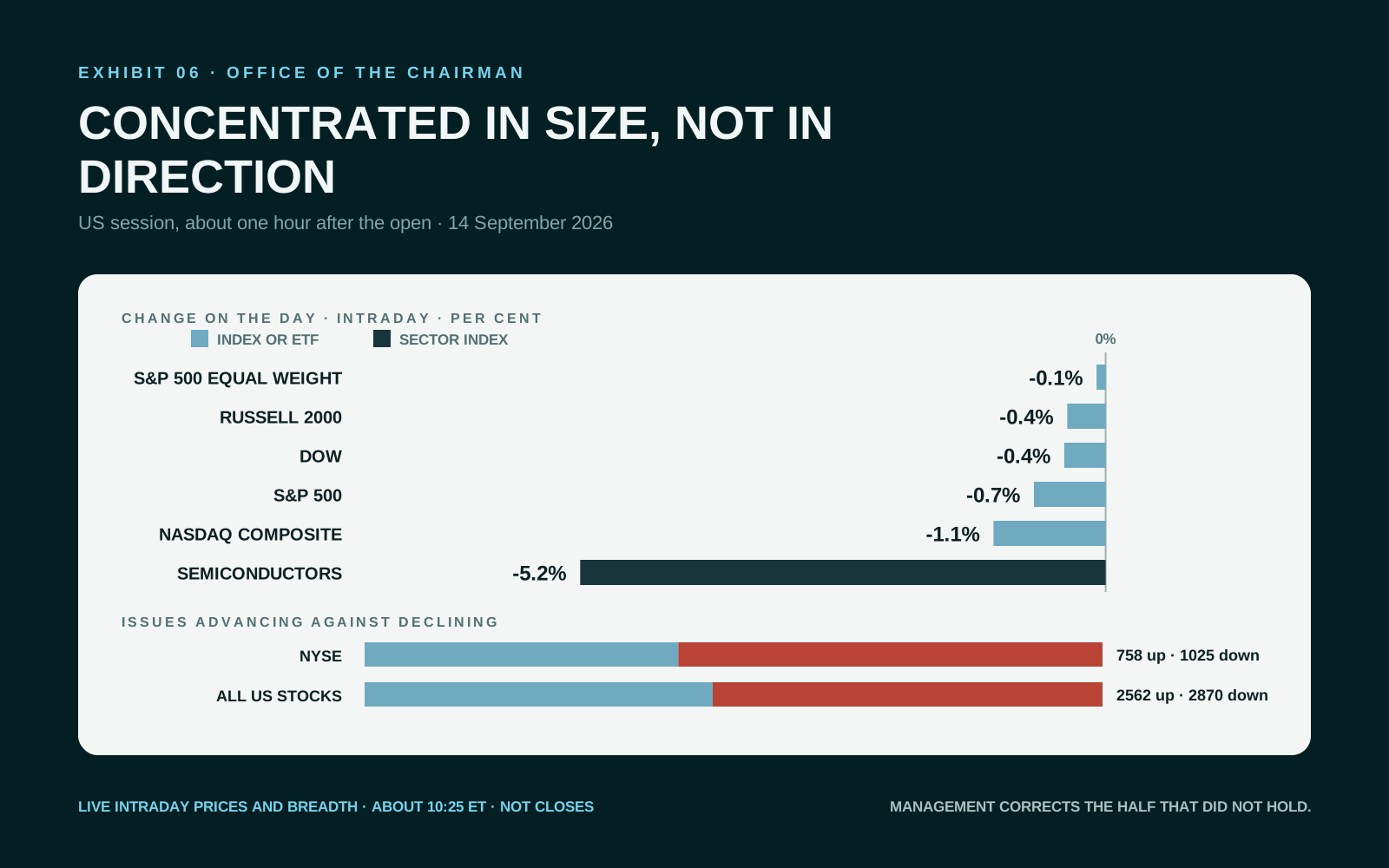
Asia closed on it first. The Nikkei ended down 0.8% and the KOSPI 3.3%, with SoftBank 10.7% lower and SK Hynix 6.4% against TSMC's 1.2% and a Hang Seng that finished higher. New York has opened the same way and harder at the centre of it: the semiconductor index fell about 5% while the Nasdaq Composite fell about 1%, Micron lost 6%, Oracle 5%, and Palantir barely moved.
The dispersion is real. The equal-weight S&P 500 is down about a tenth of a percent against seven-tenths for the capitalisation-weighted index, and that gap is the whole argument in one number. But before the open we called the reaction concentrated rather than general, and the breadth does not support the second half of that. More issues are falling than rising on both exchanges, new lows outnumber new highs, and basic materials is down more than technology. The concentration is in the magnitude, not the direction. Management would rather correct that here than quote only the measure that agreed with it.
What has not appeared is a change in anyone's stated plans. No supplier has revised guidance and no contracted cash flow moved over a weekend. A theme has been repriced; the obligations underneath it have not.
Management Must Also Mark Its Own Homework
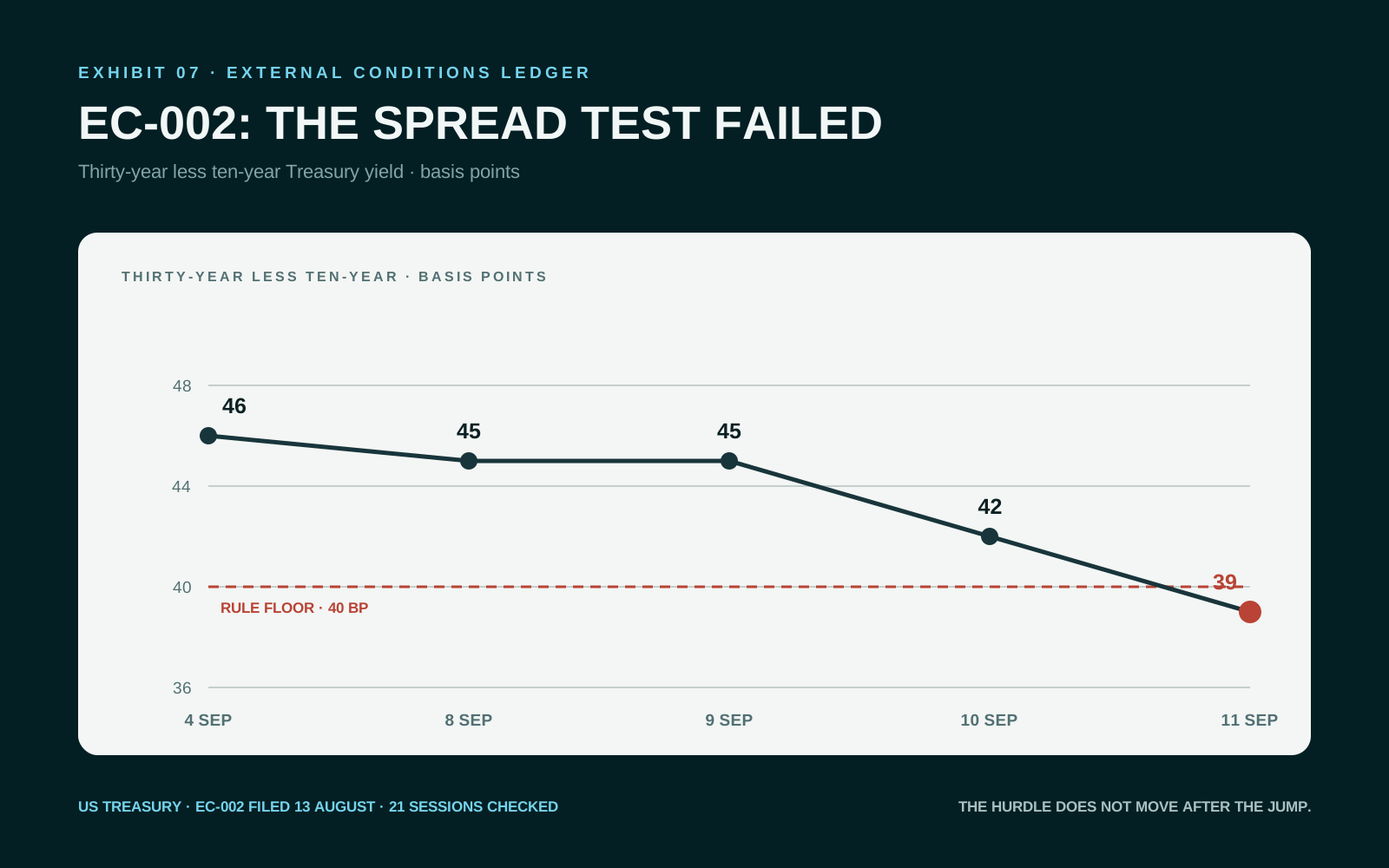
There is an update less flattering to the Chairman. Our External Conditions ledger tests earlier views against rules written before the result was known, and two of them have now failed.
EC-003 required the thirty-year yield to stay at least 85 basis points above the two-year in every session since 10 August. It was exactly 85 on 9 September, which passes, and 81 on 10 September, which does not. EC-002 required the thirty-year to hold at least 40 basis points above the ten-year since 13 August. Across all 21 sessions since filing it did so until Friday, when it closed at 39. We have recomputed both over their full since-filing histories from the Treasury's own series; the first failures are 10 and 11 September. EC-007, which required the thirty-year to hold the 13 August auction yield of 5.216%, failed on 19 August and stays failed. A yield of 5.35% on Friday does not un-fail it.
Long-term borrowing costs did remain elevated. The particular spread relationships we expected to persist did not. Both statements are true, and the second is the one the rule was written to catch. Higher yields do not retrospectively validate a forecast about the shape of the curve, and a later recovery would not erase a recorded breach. Thresholds are not revised because the Chairman's forecast has approached them.
Management files one new condition with this letter, EC-009, so that this week's argument can also fail in public. It records the claim that the recent rise in corporate borrowing yields will not be quickly reversed. The comparison level is the high-yield index's effective yield of 7.20% on 4 September. The test runs over the twenty bond-market sessions after filing and fails if the yield closes at or below that level on five consecutive sessions. A missing observation counts for neither side and resets the count. It begins today, prospectively, with no track record behind it; the horizon and the rule are editorial choices, and a pass would support only the sessions it covers.
What the Coming Week Will Test
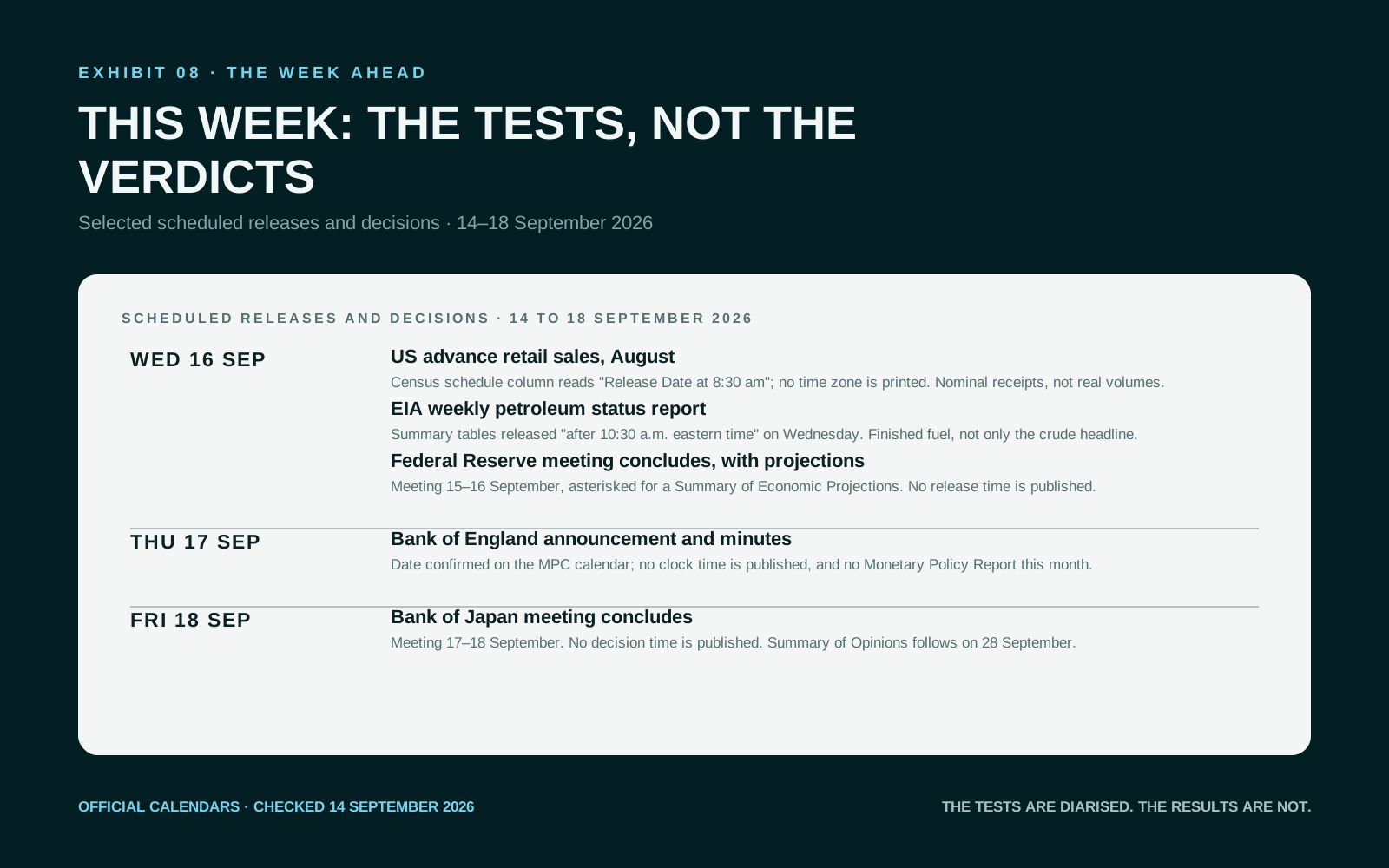
Wednesday brings the August retail report, the next weekly petroleum status report and the conclusion of a Federal Reserve meeting carrying projections. Since Friday's inflation data the market has moved to expect a rise rather than a hold, though we have that from market commentary rather than from the exchange's own page and treat it as reported. The Bank of England announces on Thursday, and the Bank of Japan's meeting concludes on Friday. The official calendars state those dates; most do not publish a decision time, and we decline to invent one.
Retail sales are a nominal series, so the question is whether receipts reflect resilient demand or higher prices for necessities; composition and revisions matter more than the headline. For energy, we want replenishment and finished-fuel availability improving together, not a friendlier crude quotation on its own. For policy, the question is the expected path and the conditions attached to it, not the direction of a single decision.
Our assessment would weaken if distillate stocks rebuild as the diesel premium narrows, corporate yields retrace and a recovery is carried broadly rather than by a few large weights. It would harden if cost pressure persists and is joined by less available financing or a material repricing of credit risk. The point is to say what we are testing before the results become convenient.
The Revised Terms
Capital can be available and still arrive too expensively, too late, or with conditions that change the investment case. A company can have a compelling order book and still have to show how the delivery is financed. A market can stay entirely functional while the people inside it find its prices hard to accommodate.
That is the view we are putting on record. It is not a claim that every alarm has been confirmed, and an hour of trading is not a verdict on any of it.
The market has not cancelled the meeting. It has circulated the rate card in advance and asked attendees to initial each page.
— The Chairman
Methodology: this letter was first published at 12:30 BST as a pre-open preview and revised after the US market opened. The revision corrects two things the opening hour overtook, both marked in the text: the claim that the ten-year had barely moved, and the description of the equity reaction as concentrated rather than general. Nothing else in the original argument has been altered to fit the result. Monthly CPI and PPI changes are seasonally adjusted; twelve-month changes are unadjusted. Treasury yields cited for last week are the Treasury's official daily par yields through the 11 September close; today's official yields publish only after this session ends, so today's are live secondary-market quotes. The ICE BofA index observations run through 11 September, which published after first issue. Asian levels are Monday closes. Crude, equity and yield levels for today are live intraday prices carrying their source's own timestamp, roughly one hour after the open, and are not closes. Weekend developments are attributed to the reports that carried them. Evidence cutoff 14 September 2026, 15:30 BST / 10:30 ET.
Source notes
- 01U.S. Treasury, Fiscal Data, Treasury Securities Auctions Data: 29-year 11-month bond reopening, 10 September 2026 (CUSIP 912810UW6), high yield 5.308%, indirect $17,452.8m of $22,000.0m accepted; 9-year 11-month note reopening, 9 September 2026 (91282CRF0), high yield 4.834%. ↗
- 02Oracle Corporation, Form 8-K, Exhibit 99.1, "Oracle Announces Q1 Results," filed 10 September 2026 (quarter ended 31 August 2026). Net cash provided by operating activities $23,103m, including "increase in deferred revenues from customer prepayments with significant financing component" $11,363m; capital expenditures $28,499m; operating cash flow less capital expenditures −$5,396m (management arithmetic, not a company-reported measure). ↗
- 03World Gold Council, "Gold ETF Flows: August 2026," published 9 September 2026: "Global gold backed ETFs added US$18bn in August, marking the second largest monthly inflow in value terms on record"; holdings rose 121t to 4,189t, "the highest on record." The record applies to holdings, not to the inflow. ↗
- 04Stonks on Stonk, Letter 007, "Everything Is Competing for Capital Now," 31 August 2026. ↗
- 05U.S. Bureau of Labor Statistics, "Consumer Price Index — August 2026," USDL-26-1496, released 11 September 2026, 08:30 ET. Rolling release URL; edition checked against the release header. ↗
- 06U.S. Bureau of Labor Statistics, CPI Table 2, August 2026, seasonally adjusted one-month changes. ↗
- 07U.S. Bureau of Labor Statistics, "Real Earnings — August 2026," released 11 September 2026. All employees: real hourly −0.1% m/m, workweek +0.3%, real weekly +0.2%, deflated by CPI-U. Production and nonsupervisory employees: real hourly −0.1%, workweek unchanged, real weekly −0.1%, deflated by CPI-W. ↗
- 08University of Michigan, Surveys of Consumers, preliminary September 2026, released 11 September 2026. Sentiment 47.8 (August 51.7); year-ahead inflation expectations 4.6% (4.0%); long-run 3.4% (3.3%). Expectations are not outcomes. ↗
- 09U.S. Census Bureau, Advance Monthly Retail Trade Report release schedule: August 2026 data released 16 September 2026, listed under a column headed "Release Date at 8:30 am." The page does not state a time zone. Advance retail sales are nominal and are not a real-volume series. ↗
- 10U.S. Bureau of Labor Statistics, "Producer Price Indexes — August 2026," archived release of 10 September 2026. Final demand +0.4% m/m; final demand goods +1.1%; diesel fuel +24.1%; services +0.1%; trade services −0.2%. ↗
- 11U.S. Energy Information Administration, Weekly Petroleum Status Report, Highlights for the week ending 4 September 2026, released 10 September 2026. Crude stocks 424.1 million barrels, "matching the five-year average"; distillate stocks 106.3 million, +2.1m on the week, "13% below the five-year average"; refinery utilisation 97.8%. ↗
- 12U.S. Energy Information Administration, "Weekly U.S. Ending Stocks of Distillate Fuel Oil" (WDISTUS1): 21 Aug 103,391; 28 Aug 104,187; 4 Sep 106,274 thousand barrels. ↗
- 13Reuters (Alex Lawler and Dmitry Zhdannikov), "Saudi pipeline outage threatens loss of 4% of global oil supply," 13 September 2026. Read in syndication; reuters.com was not reachable from the research environment. Reported: about 4 million barrels a day routed via the east–west pipeline to Yanbu, equal to about 4% of global supply; Yanbu storage about 35 million barrels, five to seven days of export cover; repairs estimated at up to five to six weeks, with one source suggesting partial pumping sooner. Reported estimates, not observed outcomes. ↗
- 14RFE/RL, "Meeting In Oman Between Iran, Gulf States Postponed, Await More 'Conducive' Conditions," 14 September 2026, via Eurasia Review. Oman News Agency: the regional meeting due in Salalah on 14 September was postponed "to a later date." The subject was Strait of Hormuz policy. ↗
- 15U.S. Energy Information Administration, Short-Term Energy Outlook, released 9 September 2026: U.S. average diesel crack spreads estimated "to exceed $2 per gallon from August through November, before decreasing steadily through mid-2027. This decrease assumes a return to normal tanker traffic through the Strait of Hormuz in the near term." Forecast, not observation; the page does not name the crude benchmark used. ↗
- 16U.S. Department of the Treasury, Daily Treasury Par Yield Curve Rates, August and September 2026, downloaded as CSV on 14 September 2026. 4 September: 2-year 4.37%, 10-year 4.78%, 30-year 5.24%. 11 September: 4.63%, 4.96%, 5.35%. Spread calculations are management's, in whole basis points. ↗
- 17Committee for a Responsible Federal Budget, "Treasury Auction Yield Hits Highest in 25 Years," 14 August 2026: the 13 August thirty-year auction at 5.216% was the highest since 2001; 5.308% on 10 September exceeds it. Ten-year "highest since 2007" per contemporaneous auction reporting. ↗
- 18ICE Data Indices via FRED. Effective yield (BAMLH0A0HYM2EY): 4 Sep 7.20%; 10 Sep 7.42%; 11 Sep 7.41%. Option-adjusted spread (BAMLH0A0HYM2): 4 Sep 2.68%; 10 Sep 2.70%; 11 Sep 2.65%. Friday's observations published after this letter first went out and are incorporated here; both series still end on 11 September, before the weekend. The two series are separately constructed; their changes are compared, not subtracted. ↗
- 19Fortune (Jason Ma), "Sam Altman confirms OpenAI won't go public this year," 12 September 2026, reporting Altman's remarks: "given everything happening with safety, right now would be an ill-advised moment to go public, and we don't feel pressure on that," and "I would say not 2026." Also carried on the Reuters wire, 12 September. No other year was named. ↗
- 20Dario Amodei, "We Must Pace the Frontier," September 2026: "We must slow the pace at which we improve the capabilities of AI models"; "pacing does not mean halting model training or technical progress"; each frontier company to give "ongoing, employee-like access to a team of embedded third-party evaluators." The essay does not discuss capital expenditure or data-centre construction. ↗
- 21OpenAI, "Accelerating the next phase," 31 March 2026. Committed capital, not a current unspent balance. ↗
- 22Reuters, "Anthropic selects Nasdaq for IPO, Business Insider reports," 13 September 2026, read in syndication: Anthropic "has selected Nasdaq for its potential initial public offering, Business Insider reported on Sunday, citing a person familiar with the company's plans." Second-hand and describes a potential offering; no filing, valuation or timing is reported. ↗
- 23Asian closing levels, Monday 14 September 2026. Associated Press via BNN Bloomberg, filed 06:10 ET: Nikkei 225 63,492.99, down 0.8%; Hang Seng 24,904.46, up 0.4%; Shanghai Composite 3,885.33, down less than 0.1%. Seoul Economic Daily: KOSPI closed 6,684.37, down 225.54 points or 3.26%. TradingKey: SoftBank Group closed at ¥5,839, down 10.72%; SK Hynix ₩1,697,000, down 6.35%; Samsung Electronics ₩249,000, down 4.05%. TSMC's 1.24% fall is the Taiwan close. One outlet reports the Nikkei close as 63,499; the level above is the one carried by two sources. These are closes, and they supersede the intraday extremes reported overnight. ↗
- 24Stonks on Stonk, External Conditions ledger. Evaluated mechanically from the Treasury's daily series; nothing is altered by hand. EC-002 and EC-003 first-failure dates independently recomputed over all sessions since filing on 14 September 2026. ↗
- 25Board of Governors of the Federal Reserve System, FOMC calendar: meeting 15–16 September 2026, asterisked as "associated with a Summary of Economic Projections." The page states no release time and notes that each date is tentative until confirmed at the preceding meeting. ↗
- 26U.S. Energy Information Administration, Weekly Petroleum Status Report release schedule: summary tables released "after 10:30 a.m. eastern time on Wednesday," other files after 13:00 ET. The 16 September date follows the standing Wednesday rule; the holiday schedule lists no exception this week. ↗
- 27Bank of England, "Monetary Policy Committee dates for 2026": MPC announcement and minutes, 17 September 2026, with no Monetary Policy Report that month. The page states no clock time. ↗
- 28Bank of Japan, Monetary Policy Meeting schedule: meeting 17–18 September 2026; Summary of Opinions 28 September. No decision time is published. ↗
- 29Live pre-open quotes read on 14 September 2026 before the US cash open: Brent November 2026 $107.31, up 2.58%; West Texas Intermediate October 2026 $102.35, up 2.30%; Nasdaq 100 December 2026 future down 1.55%; E-mini S&P 500 December 2026 future down 0.66%; US ten-year yield 4.965% against a 4.975% previous close. These are live secondary-market quotes, not settlement prices and not the Treasury's official daily par yields. The source timestamps each quote but prints no time zone, so no conversion is asserted here. ↗
- 30OilPrice.com (Irina Slav), "Brent Hits $108 as Saudi Pipeline Shutdown Deepens Supply Fears," 14 September 2026: reports a drone attack on the east–west pipeline and quotes ING that "it's unclear how severe any potential damage is, or how long it will be out of action," with a fourth-quarter base case retained at $80. The attack attribution and the seven-million-barrel capacity figure are this outlet's; note 13's four-million-barrel figure is the volume Reuters reported as actually routed. ↗
- 31Live intraday quotes read about one hour after the US open on 14 September 2026, roughly 10:25 ET. Equities: S&P 500 −0.67%, Nasdaq Composite −1.11%, Dow −0.23% to −0.48%, Russell 2000 −0.48%, PHLX Semiconductor −5.20%; SPDR S&P 500 ETF −0.71% against the Invesco S&P 500 Equal Weight ETF −0.09%; Micron −6.02%, AMD −5.33%, Oracle −4.93%, Broadcom −4.45%, Nvidia −3.69%, Palantir −0.11%. Breadth: NYSE 758 advancing against 1,025 declining; across all US stocks 2,562 advancing against 2,870 declining, with 84 new highs against 193 new lows. Sectors: basic materials −1.79% against technology −1.34%. Yields: 2-year 4.666%, a fifty-two-week high; 10-year 5.017%; 30-year 5.373%. Crude: Brent November 2026 $109.31, up 4.49%; West Texas Intermediate $104.29, up 4.24%. Credit funds: the iShares high-yield fund −0.20% and its investment-grade fund −0.23%. All are live intraday prices, not closes and not official par yields. ↗
- 32Trading Economics, US 10-year government bond yield, 14 September 2026: "The yield on the US 10-year Treasury topped 5% on Monday, its highest level since 2007, as another surge in oil prices was expected to add to inflationary pressures." Used for the level and the attribution, both of which the page states in its own words. ↗
- 33Market commentary carried in a Yahoo Finance live blog on 14 September 2026 reporting that traders are pricing a high probability of a Federal Reserve increase on Wednesday, following Friday's inflation data. We could not read the exchange's own probability page from the research environment, so this is recorded as reported commentary and not as a verified market-implied probability. No figure is quoted here for that reason. ↗
Market levels reflect the cited publication cutoff. Commentary only; not financial advice.